
UK MLB Bets 2026: Moneyline Odds, Run Lines and Prop Value
 Available in US
Table of Contents
- Analyzing MLB Betting Basics for Real-Money Wagers
- MLB Betting Strategies That Work
- Bet the underlying numbers
- Key Factors That Influence MLB Bets
- MLB Prop Bets: From Strikeouts to Home Runs
- MLB Parlays and Same-Game Parlays
- Choosing the Best MLB Betting Sites
- MLB Betting Tips for Long-Term Success
- FAQ
- Conclusion
Major League Baseball offers something that no other major American sport can match: 2,430 regular-season games spread across six months. For bettors, this abundance creates opportunity. While the NFL forces you to wait a week between Sunday slates and the NBA compresses its action into a few months, baseball serves up a daily buffet of betting possibilities from April through October.

Yet this same volume can overwhelm newcomers and experienced bettors alike. The sport operates on its own logic. Favorites lose over 40% of the time. A team can drop three straight games to a division rival and nobody panics. Starting pitchers dominate the odds in ways that would seem bizarre in basketball or football. Understanding these quirks separates profitable baseball bettors from those who treat the sport like a dice roll.
This guide covers everything you need to approach MLB betting with confidence. Whether you’re placing your first baseball wager or looking to sharpen your approach, we’ll walk through the fundamentals, dissect the major bet types, explore proven strategies, and examine the factors that actually move lines. No fluff, no hype about “guaranteed winners.” Just practical knowledge you can apply tonight.
Analyzing MLB Betting Basics for Real-Money Wagers
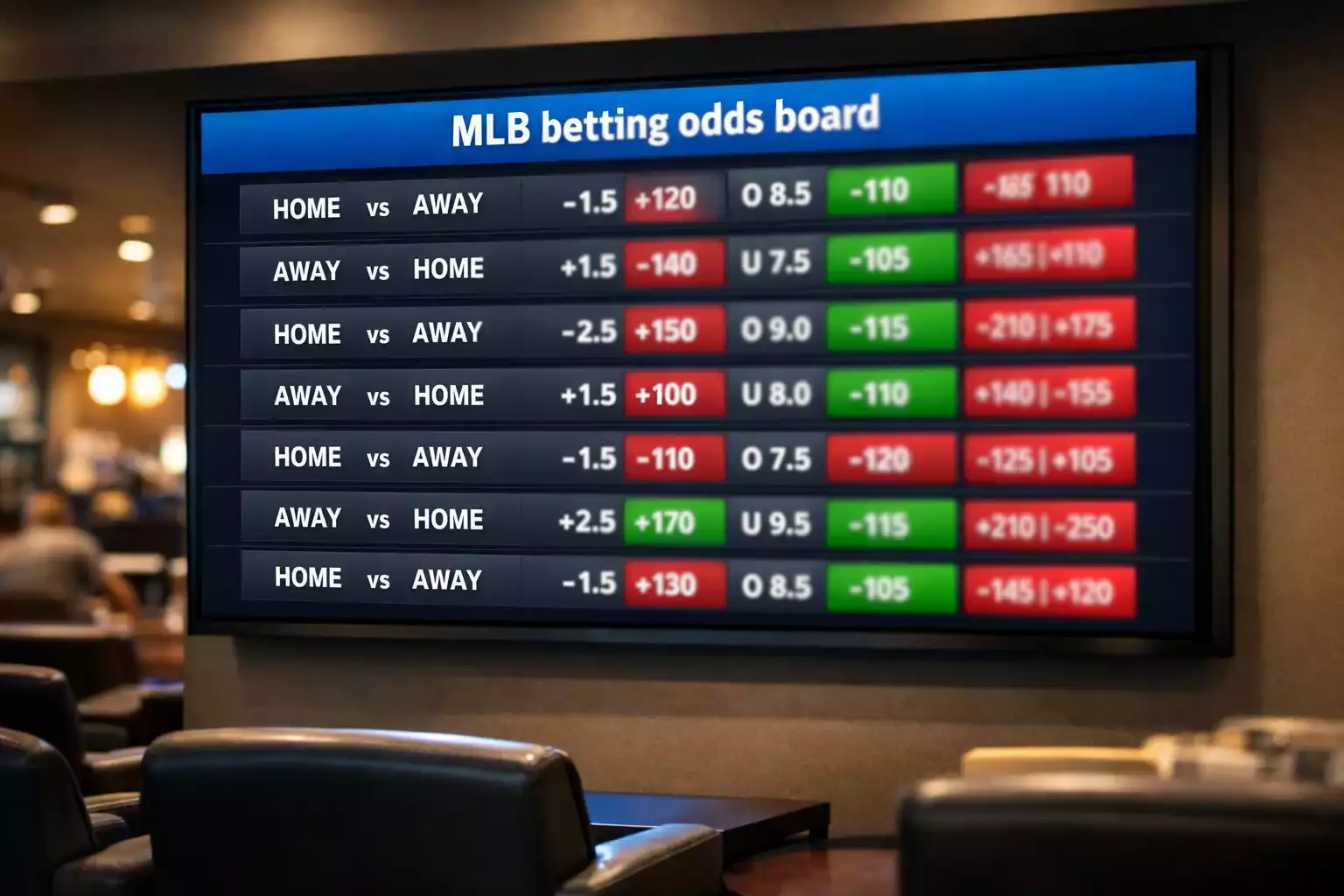
What Are MLB Bets?
At its core, betting on baseball means wagering money on the outcomes of MLB games, player performances, or season-long results. You’re predicting what will happen and putting money behind that prediction. If you’re right, you profit. If you’re wrong, the sportsbook keeps your stake.
Baseball betting differs from other major sports in several important ways. First, MLB is overwhelmingly a moneyline sport. While football and basketball bettors obsess over point spreads, baseball bettors focus primarily on picking straight-up winners. The run line exists, but it’s secondary to the moneyline market. This distinction matters because it changes how you think about favorites and underdogs.
Second, the 162-game season creates a different rhythm. Teams play almost every day for six months. Hot streaks and cold spells happen to everyone. The best team in baseball loses 60 games; the worst team wins 60. This variance is baked into the sport, and smart bettors embrace it rather than fight against it.
Third, starting pitchers drive everything. In no other team sport does a single player influence the betting line as much as an MLB starter. When Jacob deGrom or Shohei Ohtani takes the mound, the line moves dramatically compared to a fifth starter facing the same opponent. You’re not just betting on the Yankees or the Dodgers. You’re betting on a specific pitcher on a specific day against a specific lineup.
How MLB Odds Work
American sportsbooks display MLB odds in a format that confuses newcomers: plus and minus signs followed by three-digit numbers. Once you understand the system, it becomes second nature.
A minus sign indicates the favorite. When you see the Dodgers listed at -150, that number tells you how much you must bet to win one hundred dollars. A $150 wager on a -150 favorite returns $250 total if successful, which includes your original $150 stake plus $100 in profit.
A plus sign indicates the underdog. When the Rockies show +130, that number tells you how much profit a hundred-dollar bet would generate. A $100 wager on a +130 underdog returns $230 total, meaning your original $100 plus $130 in profit.
The gap between the favorite and underdog odds represents the sportsbook’s built-in edge, commonly called juice or vigorish. In a hypothetical fair market, a coin flip would show both sides at +100. Real sportsbooks need to profit, so they build in margin. A typical MLB moneyline might show the favorite at -130 and the underdog at +110. That twenty-cent gap between -130 and +130 represents the house edge.
Understanding implied probability helps you evaluate whether odds offer value. To convert American odds to implied probability, use simple formulas. For favorites, divide the odds by the odds plus 100. A -150 favorite implies 150 divided by 250, or 60% probability. For underdogs, divide 100 by the odds plus 100. A +130 underdog implies 100 divided by 230, or about 43.5%.
Notice that these percentages add up to more than 100%. That’s the juice. The sportsbook is essentially charging you for the privilege of betting. Over thousands of wagers, this edge compounds. Finding lines with lower juice or better odds than your probability estimates becomes the foundation of profitable betting.
Types of MLB Bets
The baseball betting menu has expanded dramatically over the past decade. Understanding each option helps you find the markets that match your knowledge and risk tolerance.
Moneyline bets represent the purest form of baseball wagering. You pick a team to win the game, period. No spreads, no points, no complications. If your team wins 2-1 in eleven innings or 15-3 in regulation, you cash the same ticket. The simplicity appeals to beginners, but moneylines reward deep knowledge of pitching matchups and team dynamics.
Run line bets introduce a spread to baseball. The standard run line is 1.5 runs. Betting a favorite at -1.5 means they must win by two or more runs for you to cash. Betting an underdog at +1.5 means they can lose by one run and you still win. This creates interesting dynamics. A dominant team facing a weak opponent might be -200 on the moneyline but only -130 on the -1.5 run line. Conversely, taking the +1.5 on an underdog often offers plus-money odds even when the team’s moneyline is close to even.
Totals focus on combined scoring rather than winners. The sportsbook sets a line, typically between 7 and 10 runs depending on the matchup, and you bet whether the actual combined score lands over or under that number. Totals betting requires understanding ballpark factors, weather, pitching matchups, and bullpen depth. A game at Coors Field with two shaky starters plays differently than a game at Oracle Park featuring aces.
First five innings bets isolate the starting pitchers by eliminating the bullpen from the equation. The bet settles based on the score after the fifth inning ends. If you trust an ace but worry about a shaky bullpen, first five innings bets let you exploit that confidence without sweating the late innings. These markets exist for both moneylines and totals.
NRFI and YRFI bets focus on the first inning only. NRFI means “no run first inning,” betting that neither team scores before the second inning begins. YRFI takes the opposite side. These quick-hit wagers appeal to bettors who want early action and fast resolution. Sharp bettors analyze how quickly starters typically settle into games, looking at first-inning ERA and opponent first-inning OPS.
Prop bets move beyond game outcomes to individual performances. Will a pitcher record over 6.5 strikeouts? Will a batter get more than 1.5 total bases? Will there be a home run in the first three innings? The prop market has exploded, offering dozens of options per game. We’ll dive deeper into props later in this guide.
Parlays combine multiple bets into a single wager. All legs must hit for the parlay to cash, but the potential payout multiplies with each addition. Sportsbooks love parlays because the house edge compounds with every leg. Bettors love them because of the potential for large returns on small stakes. Same-game parlays let you combine multiple outcomes from a single contest, creating correlated bets that can offer value when constructed thoughtfully.
Futures look beyond tonight’s game to season-long outcomes. Who wins the World Series? Who takes the American League MVP? Will the Giants win more than 82.5 games? Futures tie up your bankroll for extended periods but offer opportunities to capitalize on preseason value or bet against public perception.
MLB Betting Strategies That Work

Fundamental Strategies for Beginners
Starting with moneylines makes sense for new baseball bettors. You’re learning to evaluate pitching matchups, understand team dynamics, and read line movements without the added complexity of spreads or totals. Pick winners. Learn from your losses. Build pattern recognition before adding variables.
Avoid heavy favorites early in your betting journey. Yes, the Dodgers at -300 will probably beat the Marlins. But that price requires you to risk three hundred dollars to win one hundred. Lose one of those bets and you need to win three more just to break even. Heavy favorites create an illusion of safety while offering terrible risk-reward ratios. The math punishes you even when you’re right most of the time.
Line shopping transforms marginal bettors into profitable ones. Different sportsbooks hang different numbers on the same games. The Yankees might be -145 at one book and -135 at another. Over a single bet, that difference seems trivial. Over a thousand bets, it’s the difference between losing and winning. Maintaining accounts at multiple sportsbooks takes minimal effort but pays consistent dividends.
Flat betting and bankroll management protect you from yourself. Decide on a unit size, typically one to two percent of your total bankroll, and stick to it regardless of confidence level. Everyone thinks their lock of the week deserves five units. Nobody remembers the five-unit losses that wiped out a month of steady profits. Variance in baseball runs deep. Flat betting keeps you in action through the inevitable cold stretches.
Intermediate Strategies
Betting against the public offers consistent value in baseball. When a popular team plays a prime-time game, the public loads up on the recognizable name. Sportsbooks respond by moving the line to balance their liability, which often creates value on the other side. Fading the public doesn’t mean blindly betting underdogs, but it does mean recognizing when public money has pushed a line beyond its true value.
Exploiting early lines requires waking up before the masses. Sportsbooks release opening lines that sharp bettors immediately attack. By mid-afternoon, the line has often moved significantly as books adjust to professional action. If you can identify early value before the line corrects, you capture an edge that disappears by game time. This strategy demands quick analysis and decisive action.
First five innings betting deserves more attention than it receives. Starting pitchers dominate the early innings, and their performance is far more predictable than bullpen outcomes. When you bet a team’s first five innings line, you’re essentially betting on their starter against the opposing starter. Bullpen volatility, which introduces massive variance into full-game bets, simply doesn’t factor in.
Divisional underdogs offer structural advantages. Teams within a division play each other thirteen times per season. Familiarity breeds competitive games. The worst team in a division still knows the best team’s pitching staff intimately. They’ve seen those fastballs and breaking balls dozens of times. These matchups produce more upsets than interdivisional games where teams meet only six times annually.
Hot and cold streak analysis requires nuance. A team winning eight straight games feels unstoppable, but baseball regression is relentless. That eight-game streak probably included some luck, some opponent weakness, and some legitimate improvement. Disentangling these factors determines whether you should ride the streak or fade it. Look at underlying metrics rather than just wins and losses. A team winning close games at an unsustainable rate is due for regression even if the streak continues.
Advanced Strategies for Sharp Bettors
Sabermetrics revolutionized baseball analysis over the past two decades, and betting markets haven’t fully caught up. Traditional statistics like ERA and RBI still dominate public perception, but advanced metrics tell more predictive stories.
FIP, or Fielding Independent Pitching, strips out factors beyond a pitcher’s control to reveal true performance. A pitcher with a 4.50 ERA but a 3.20 FIP has likely suffered from poor defense or bad luck on balls in play. Expect regression toward the FIP. Conversely, a pitcher with a 3.00 ERA but a 4.00 FIP has outperformed his underlying skills and will likely regress upward.
wOBA, or weighted on-base average, improves on traditional batting average by weighting each type of hit by its actual run value. A double matters more than a single. A home run matters more than a double. wOBA captures these differences in a single number that correlates strongly with team run scoring. Comparing a lineup’s collective wOBA against a pitcher’s wOBA-against reveals matchup edges invisible in traditional stats.
xFIP takes FIP further by normalizing home run rates, recognizing that fly ball rates predict home runs better than actual home runs over small samples. A pitcher whose home run rate has spiked temporarily will show a higher FIP but a lower xFIP, suggesting the ERA is likely to drop.
Bullpen analysis separates professional bettors from amateurs. Knowing which relievers pitched yesterday, how many pitches they threw, and whether they’re available tonight directly impacts late-game outcomes. A team with their best three relievers unavailable after a taxing series is far more vulnerable than their overall bullpen statistics suggest.
Bet the underlying numbers
Weather and ballpark factors influence totals betting significantly. Wind blowing out at Wrigley adds runs. Wind blowing in subtracts them. Coors Field plays as a hitter's paradise due to altitude reducing pitch movement and carry distance. Oracle Park's deep dimensions and heavy marine air suppress scoring. Temperature matters too. Baseballs travel farther in warm air. Games in July routinely produce higher scoring than April games with identical pitching matchups.
Umpire tendencies create exploitable edges. Some umpires consistently call wider strike zones, which suppresses scoring. Others squeeze pitchers, generating more walks and higher totals. The data exists for anyone willing to research it. Home plate umpire assignments are announced the day before games, giving sharp bettors time to incorporate this information into their analysis.
Closing line value represents the ultimate measure of betting skill. The closing line, the odds available just before first pitch, incorporates the most information and tends to be the most accurate. If you consistently beat the closing line, betting underdogs that close shorter and favorites that close longer, you're demonstrating genuine edge. Track your bets against closing lines rather than just tracking wins and losses. Short-term results involve variance. Long-term CLV reveals whether your analysis actually works.
Key Factors That Influence MLB Bets

Starting Pitchers
No single factor moves MLB betting lines like the starting pitcher. When an ace takes the mound, his team's moneyline can swing fifty cents or more compared to a replacement-level starter. Understanding why requires appreciating just how much starters control early-game outcomes.
A starting pitcher faces roughly twenty-five batters over six innings of work. He controls the tempo, dictates which pitches the offense sees, and determines whether the game features soft contact or hard-hit balls. Elite starters regularly hold opponents to two runs or fewer. Below-average starters give up five runs as often as they give up three. This variance overwhelms most other factors.
The statistics that matter extend beyond ERA. Fielding Independent Pitching reveals how much of a pitcher's success comes from his own skills versus his defense. Strikeout rate shows swing-and-miss ability. Walk rate reveals command. WHIP indicates how many baserunners a pitcher allows. Ground ball rate matters for certain ballparks and defenses. Look at platoon splits too: some pitchers dominate right-handed hitters but struggle against lefties, or vice versa.
Historical matchup data provides context but demands caution. Yes, a hitter who's eight-for-fifteen lifetime against a specific pitcher has demonstrated success. But small samples mislead. That success might have come three years ago before the pitcher added a new pitch or refined his approach. Weight recent performance more heavily than career numbers.
Rest and workload matter in subtle ways. A pitcher coming off a start where he threw 120 pitches might not have his best stuff. A pitcher on five days rest instead of four often performs better. Spring training and early April starts see pitchers still building arm strength. These factors rarely move the line dramatically but create edges at the margins.
Bullpen Strength
Once the starter exits, bullpen quality determines outcomes. A team can dominate for six innings and still lose because their seventh-inning guy gave up four runs. Evaluating bullpen strength requires looking beyond aggregate statistics to recent workload and availability.
Relief pitchers work in short bursts, which makes their day-to-day availability vary wildly. A closer who pitched two consecutive nights might be unavailable for a third. A setup man who threw forty pitches in an extended appearance needs recovery time. Teams guard this information closely, but beat reporters often reveal who's available and who's not.
High-leverage situations demand specific relievers. A team might have a strong overall bullpen but lack a reliable option for facing left-handed hitters in the eighth inning. Knowing which relievers managers trust in specific situations helps predict late-game outcomes. Some teams have deep pens that maintain quality across seven, eight, and nine. Others rely heavily on one or two arms and collapse when those arms are unavailable.
Analyzing bullpen usage patterns from recent games reveals more than season-long statistics. A team playing its fourth game in four days has likely taxed its relief corps. The starters probably went shorter than usual, forcing the bullpen to absorb extra innings. That team enters today's game with reduced options, creating vulnerability invisible in their overall bullpen ERA.
Lineups and Injuries
Baseball lineups fluctuate daily in ways that other sports don't match. Star players get scheduled rest days. Platoon arrangements shuffle regulars in and out. Late scratches remove players from lineups announced hours earlier. Staying current matters more than in any other major sport.
Missing a single key hitter might seem minor in a nine-player lineup, but the impact cascades. That missing cleanup hitter means the number three hitter sees fewer fastballs because pitchers aren't scared of who follows. The replacement player in the five-hole offers far less protection. Run expectancy drops throughout the lineup when one anchor disappears.
Platoon advantages create daily variance. A lineup facing a left-handed starter might look completely different than the same team facing a right-hander. The left-handed-hitting first baseman sits. The right-handed bench player starts. These adjustments optimize matchups but also change a team's overall offensive profile.
Late scratches move lines minutes before first pitch. A star player who wakes up with a sore back might exit the lineup an hour before game time. Sharp bettors monitor lineup announcements and act quickly when significant changes appear. If you're betting games early, you're accepting the risk that the lineup you evaluated might not be the lineup that plays.
External Factors
Weather impacts baseball more than casual fans realize. Temperature affects how far batted balls travel. A ball that carries for a home run on a 90-degree July evening might die on the warning track on a 55-degree April night. Wind direction at Wrigley Field literally determines whether fly balls become outs or home runs. Humidity affects pitch movement. Rain delays disrupt pitching rhythms and alter bullpen usage plans.
Ballpark dimensions create dramatically different run environments. Yankee Stadium's short right-field porch favors left-handed power hitters. Fenway's Green Monster turns some fly balls into doubles while keeping others in the park for outs. Petco Park's spacious outfield suppresses home runs. These factors remain constant, which means you can study them once and apply that knowledge all season.
Schedule spots create hidden fatigue. A team finishing a long road trip plays less effectively than their talent suggests. A team playing a day game after a night game, especially following coast-to-coast travel, operates at diminished capacity. The best team in baseball still suffers from jet lag. These factors don't show up in season statistics but affect individual game outcomes.
MLB Prop Bets: From Strikeouts to Home Runs

Understanding Prop Bet Markets
Proposition bets shift your focus from team outcomes to individual performances. Instead of picking winners, you're predicting whether a pitcher will strike out seven batters or a hitter will collect two hits. This granular approach opens markets where your specific knowledge can overcome the sportsbook's edge.
The prop betting landscape has expanded dramatically. Modern sportsbooks offer dozens of props per game, covering pitchers and batters from both teams. Strikeout totals, total bases, hits, home runs, RBIs, runs scored, stolen bases, earned runs allowed, and outs recorded all have their own markets. Some books even offer props on specific at-bats or innings.
Props operate independently from game outcomes. Your strikeout prop can cash even if the pitcher's team loses badly. Your total bases bet can fail even when your favorite hitter's team dominates. This independence allows you to express opinions about individual matchups without needing to predict nine-inning results.
Popular MLB Prop Categories
Pitcher strikeout props attract heavy action and sharp analysis. The line typically hovers around five to seven strikeouts depending on the pitcher's profile and opponent. High-strikeout pitchers facing teams that swing and miss frequently create over opportunities. Control artists facing patient lineups often stay under. Consider innings expectations too. A pitcher who regularly goes seven innings has more opportunities to rack up strikeouts than one who typically exits after five.
Batter total bases aggregates all offensive production into a single number. A single counts as one base. A double counts as two. A home run counts as four. Walks don't count toward total bases. The line usually sits between 1.5 and 2.5 total bases for everyday players. Power hitters facing favorable pitcher matchups create over value. Slumping hitters or those facing dominant starters often stay under.
Hits props focus specifically on batters reaching base via hits rather than walks or errors. Most everyday players see lines around 0.5 or 1.5 hits. The challenge involves distinguishing contact ability from power. A line-drive hitter who rarely walks but consistently puts the ball in play approaches hits props differently than a slugger who either homers or strikes out.
Team props remove the opposing offense from consideration. Instead of betting the full game total, you're betting whether the Yankees will score over or under 4.5 runs. This isolates your analysis to one pitching staff and one lineup. If you have strong opinions about a specific starter but uncertainty about his counterpart, team totals let you act on that partial conviction.
Finding Value in Prop Markets
Prop market inefficiencies persist because sportsbooks spread their resources across thousands of daily markets. The moneyline for a nationally televised game receives intense scrutiny and professional action that hammers the line into efficiency. The eighth-inning reliever's outs-recorded prop? Not so much. This disparity creates opportunities for bettors willing to do research that books skip.
Matchup analysis drives prop betting success. A pitcher's strikeout rate tells one story. That same pitcher's strikeout rate against left-handed hitters tells another. If tonight's opponent stacks their lineup with lefties, the relevant statistic changes. Similarly, a batter's season-long total bases average matters less than his production against right-handed power pitchers throwing four-seam fastballs. Getting specific reveals edges that aggregate numbers hide.
Platoon splits deserve particular attention. Some hitters absolutely mash left-handed pitching but struggle against righties. Their overall statistics blend these two profiles into a misleading average. When you know tonight's matchup features a lefty starter, the hitter's splits against lefties become far more predictive than his full-season line.
Home and away performance diverges for many players. Some hitters thrive in their home ballpark's dimensions and struggle on the road. Pitchers often perform better at home, where familiar surroundings and supportive crowds boost confidence. These splits add another layer of analysis that casual bettors overlook.
MLB Parlays and Same-Game Parlays
How MLB Parlays Work
A parlay combines multiple individual bets into a single wager. All selections must win for the parlay to cash. Miss one leg, lose everything. This all-or-nothing structure creates dramatic risk-reward profiles that draw bettors seeking big payouts from small stakes.
The payout multiplication follows mathematical principles. A two-team parlay at standard -110 odds pays roughly 2.6:1. A three-teamer pays around 6:1. Four teams approaches 11:1. The potential returns grow exponentially as you add legs, which explains the appeal. A $20 bet can return hundreds or even thousands of dollars if everything hits.
But that multiplication works against you too. The sportsbook's edge compounds with each leg. A single bet at -110 faces roughly 4.5% juice. A two-leg parlay faces nearly 9% theoretical edge. By the time you reach four or five legs, you're fighting substantial mathematical headwinds. The house edge grows faster than most bettors realize.
Correlation matters enormously in parlay construction. If your parlay legs are independent, the math works one way. If they're correlated, meaning one outcome influences another, the dynamics shift. Traditional sportsbooks handled correlation poorly, creating exploitable situations. Modern books have gotten smarter, but opportunities still exist for bettors who understand relationships between outcomes.
Same-Game Parlay Strategies
Same-game parlays let you combine multiple outcomes from a single contest. Instead of parlaying the Yankees moneyline with the Dodgers over, you can parlay the Yankees moneyline with Aaron Judge to hit a home run and Gerrit Cole to record seven strikeouts. Everything comes from one game.
Correlation becomes central to same-game parlays. If you bet a team to win and their ace to record many strikeouts, those outcomes support each other. A pitcher racking up strikeouts typically keeps his team in the game. If you bet the over on total runs and a specific hitter to get multiple hits, those outcomes also correlate positively. High-scoring games mean more plate appearances and more opportunities for hits.
The best same-game parlays exploit logical connections between outcomes. A dominant pitching performance often coincides with team victory. A high-scoring game produces more individual statistical production across both lineups. Building parlays around these relationships improves your odds compared to combining unrelated outcomes.
Pitcher strikeouts and team wins form the classic correlated same-game parlay. When Cole strikes out nine, the Yankees usually win. When the Yankees win, Cole often has racked up strikeouts. The individual probabilities differ from the combined probability in ways that can favor alert bettors. Not every sportsbook prices these correlations correctly.
Parlay Pitfalls to Avoid
Chasing large payouts leads to ruin. The dream of turning $25 into $2,500 on a ten-leg parlay seduces bettors into making bets that rarely, if ever, cash. Yes, someone somewhere hits these monster parlays occasionally. Millions more lose their stakes game after game while chasing that dream. Treat parlays as entertainment rather than as a wealth-building strategy.
Adding legs because they feel safe actually increases your risk. "This game is a lock, so I'll add it to boost my parlay payout." But nothing in baseball is a lock. Every additional leg reduces your probability of winning. That -400 favorite you threw in to juice your payout? They lose 20% of the time. One upset destroys your entire parlay.
Ignoring correlation in traditional parlays creates inefficient bets. If you parlay the under in Game A with the under in Game B, and both games feature aces in cold weather at pitcher-friendly parks, you're not getting diversification. You're doubling down on a single betting thesis. Recognize when your parlay represents concentrated exposure to one factor rather than genuinely independent selections.
Choosing the Best MLB Betting Sites

What to Look for in an MLB Sportsbook
Not all sportsbooks treat baseball equally. Some operators prioritize football and basketball, offering thin MLB markets and slow line updates. Others have built robust baseball offerings that serve serious bettors. Knowing what to evaluate helps you find platforms that match your needs.
Competitive odds and low juice top the priority list. A book offering -105 on both sides of a totals bet gives you far better value than one charging -115. Over hundreds of bets, this difference determines whether you profit or slowly bleed money to the house. Compare odds across multiple books before deciding where to concentrate your action.
Market depth matters for bettors seeking props, first five innings lines, or obscure futures. Some books offer thirty prop options per game. Others barely cover the basics. If you've developed an edge in specific markets, you need platforms that actually offer those markets with reasonable liquidity and pricing.
Mobile app quality affects daily usability. You'll check lines, monitor games, and place live bets from your phone more often than from a desktop. A buggy app with slow load times costs you opportunities when lines move quickly. Test apps before committing significant bankroll to any platform.
Payout speed and reliability separate reputable operators from questionable ones. Books that process withdrawals within 24 hours deserve your business over those that delay for weeks. Read reviews from actual users, not promotional content. Withdrawal experiences reveal more about a sportsbook's character than deposit bonuses.
Line Shopping Across Multiple Books
Maintaining accounts at several sportsbooks requires minimal effort but generates consistent returns. The Yankees might be -140 at one book and -130 at another for the same game. That ten-cent difference compounds dramatically over a full season of wagering.
Several free odds comparison websites aggregate lines from major sportsbooks, displaying side-by-side comparisons updated in real time. Bookmarking these sites and checking them before every bet becomes second nature within a week. The process adds maybe thirty seconds per bet but improves long-term results by multiple percentage points. No analytical skill required, just discipline and a few browser tabs.
MLB Betting Tips for Long-Term Success
Bankroll Management
Setting a dedicated betting bankroll separates recreational bettors from those approaching the activity seriously. This money exists for wagering and nothing else. Bills, savings, and daily expenses stay completely separate. When the bankroll runs out, betting stops until you can responsibly replenish it.
Unit sizing provides structure for individual wagers. Most successful bettors risk one to two percent of their bankroll per bet. On a $1,000 bankroll, that means $10-20 per wager. This conservative approach survives losing streaks that inevitably occur. Even strong handicappers experience runs of ten or fifteen consecutive losses. Proper unit sizing ensures these stretches hurt without destroying your ability to continue.
Avoiding the chase might be the hardest discipline to master. After a losing day, the temptation to double up and "get even" overwhelms rational thinking. This response leads to escalating bet sizes, deteriorating selection quality, and eventually catastrophic losses. Accept bad days as part of the process. Tomorrow brings fresh games and fresh opportunities.
Record Keeping and Staying Disciplined
Tracking every bet creates accountability and reveals patterns. Log the date, teams, bet type, odds, stake, and result for each wager. Review this data monthly to identify which bet types generate profit and which drain your bankroll. You might discover that your moneyline picks excel while your totals bets consistently lose. This knowledge directs future focus.
Emotional betting destroys bankrolls faster than poor handicapping. Betting on your favorite team, chasing losses, or increasing stakes after wins all stem from emotion rather than analysis. Develop a process for identifying value, then follow that process regardless of how you feel. The market doesn't care about your emotions, and neither should your betting approach.
Responsible gambling means knowing when to step away. If betting causes financial stress, relationship problems, or emotional distress, those are signals to reevaluate your relationship with wagering. Resources exist for those who need support. Taking breaks during losing streaks helps maintain perspective. This should enhance your baseball enjoyment, not diminish your quality of life.
FAQ
How do MLB betting odds work, and what do the plus and minus signs mean?
MLB odds use the American format where minus signs indicate favorites and plus signs indicate underdogs. A favorite at -150 requires risking $150 to win $100. An underdog at +130 returns $130 profit on a $100 bet. The difference between the two numbers represents the sportsbook's built-in profit margin, called juice or vigorish. To convert odds into implied probability, divide the favorite's odds by itself plus 100, or divide 100 by the underdog's odds plus 100. These percentages help you evaluate whether the listed price offers value compared to your own probability estimates.
What is the most profitable MLB betting strategy?
No single strategy guarantees profits, but several approaches consistently outperform random selection. Line shopping across multiple sportsbooks ensures you always get the best available price, which improves returns by multiple percentage points annually. Focusing on underdogs rather than heavy favorites provides better risk-reward ratios, since baseball underdogs win frequently compared to other sports. First five innings bets let you isolate starting pitching matchups while avoiding bullpen volatility. Advanced bettors use sabermetrics like FIP and wOBA to identify situations where public perception lags behind actual performance. Combining these approaches with disciplined bankroll management creates the foundation for sustainable success.
How do starting pitchers and weather affect MLB betting lines?
Starting pitchers influence MLB lines more than any other factor in team sports. An ace taking the mound might move his team's moneyline by fifty cents compared to a below-average starter. Oddsmakers adjust based on pitcher statistics, recent performance, and historical matchups against the opposing lineup. Weather affects totals markets significantly. Wind blowing out increases home run probability and pushes totals higher. Cold temperatures reduce ball carry distance and suppress scoring. Humidity and altitude affect pitch movement and batted ball distance. Checking weather forecasts and ballpark conditions before betting totals can reveal edges invisible in the base odds.
Conclusion
MLB betting rewards patience, discipline, and continuous learning. The 162-game season provides abundant opportunities but also demands respect for variance. Teams lose when they should win. Favorites fall to underdogs. Great pitchers get shelled. These outcomes aren't failures of analysis but rather the nature of baseball.
Start with the fundamentals. Understand how odds work and what the different bet types offer. Learn to evaluate pitching matchups and recognize the factors that actually move lines. Build your knowledge of advanced statistics and external factors over time rather than trying to master everything immediately.
Maintain multiple sportsbook accounts for line shopping. Track your bets meticulously. Manage your bankroll conservatively. Stay disciplined when emotions urge reckless decisions. These unglamorous habits separate profitable bettors from those who fund the industry.
Baseball offers something unique: the chance to engage with the sport on a deeper analytical level while potentially profiting from that engagement. Approach it seriously, respect the variance, and enjoy the process. Every night brings new games, new matchups, and new opportunities to test your understanding against the market.
Published by the mlb Bets team.